Opinion piece by Mr. Gowri Shankar
(Image by F1 Digitals from Pixabay)
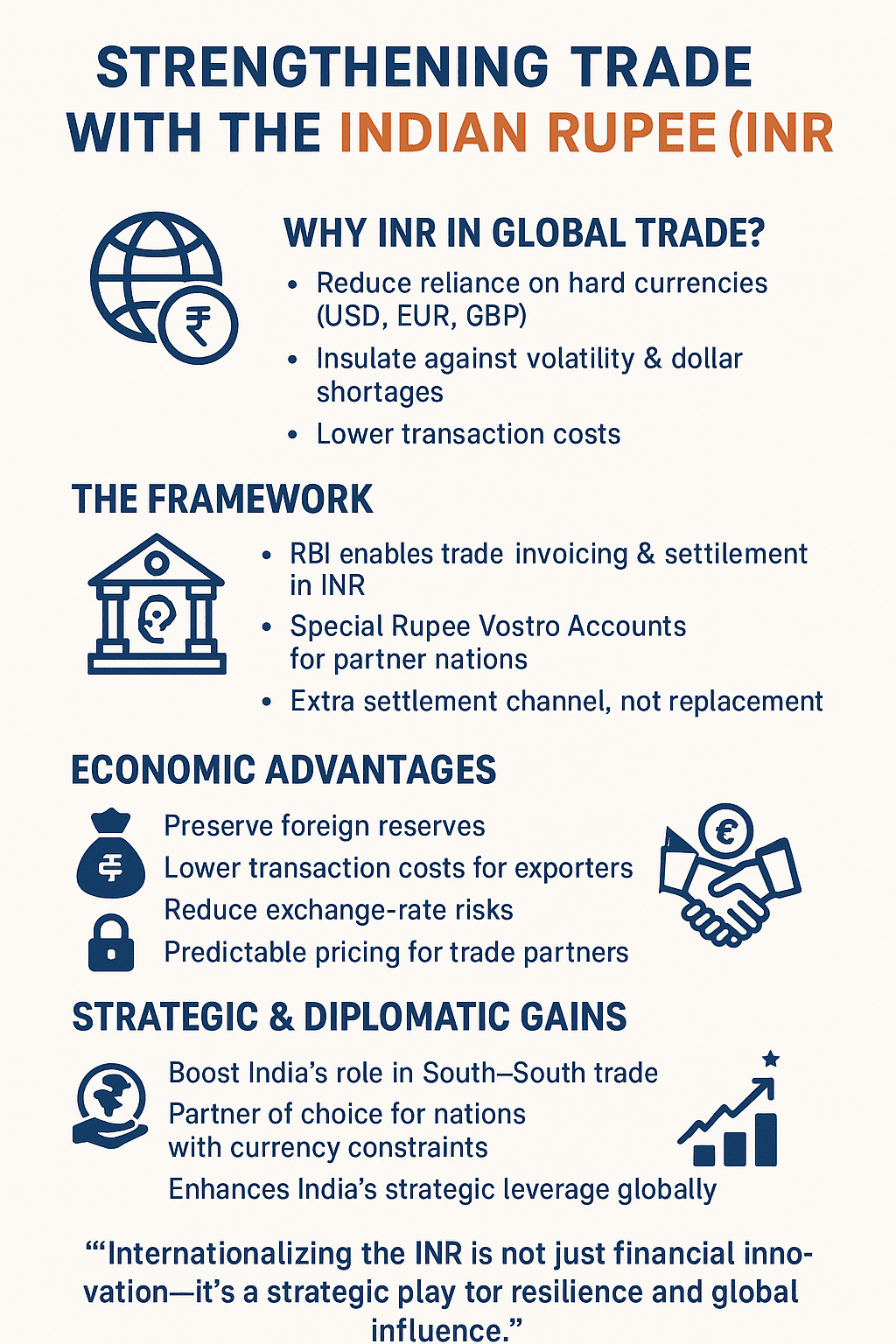
India’s decision to promote the use of the Indian Rupee (INR) in international trade marks a pivotal shift in its economic strategy. The initiative is not about abandoning existing hard-currency mechanisms, but about creating an additional, resilient settlement channel that strengthens India’s economic position and reduces structural vulnerabilities.
The Strategic Rationale
The global financial system’s dependence on a handful of hard currencies has historically exposed India to volatility, dollar shortages, and high transaction costs. By enabling trade invoicing and settlement in INR—backed by Special Rupee Vostro Accounts—the Reserve Bank of India has created a credible framework to insulate the economy from external shocks. For partner nations, particularly those facing currency constraints or sanctions, INR settlements provide an attractive alternative.
Economic Advantages
At the macro level, reducing demand for dollars helps preserve foreign reserves and stabilizes the balance of payments. At the business level, avoiding double conversions lowers transaction costs and improves competitiveness for Indian exporters. The system also reduces exchange-rate risks, enabling more predictable pricing for trade partners.Collectively, these levers strengthen India’s economic resilience while lowering the cost of global integration.
Strategic and Diplomatic Gains
The adoption of INR in international trade enhances India’s influence in bilateral relationships. For developing economies, it offers a practical route to reduce over-reliance on the dollar, positioning India as a partner of choice in South–South trade. For India, it expands strategic leverage, particularly in regions where currency shortages or geopolitical constraints limit traditional trade flows.
Long-Term Implications
Over time, wider use of INR in trade settlement can elevate the currency’s credibility and accelerate its journey toward partial internationalization. When combined with India’s strength in digital payment infrastructure, the initiative lays the groundwork for the rupee to emerge as a trusted settlement currency across Asia and beyond.
Internationalizing the INR is not merely a financial innovation—it is a strategic play. It lowers systemic risks, cuts transaction costs, and builds economic resilience, while simultaneously enhancing India’s diplomatic capital.